Wheeled Humanoid Robot Compute Platforms
The Challenge
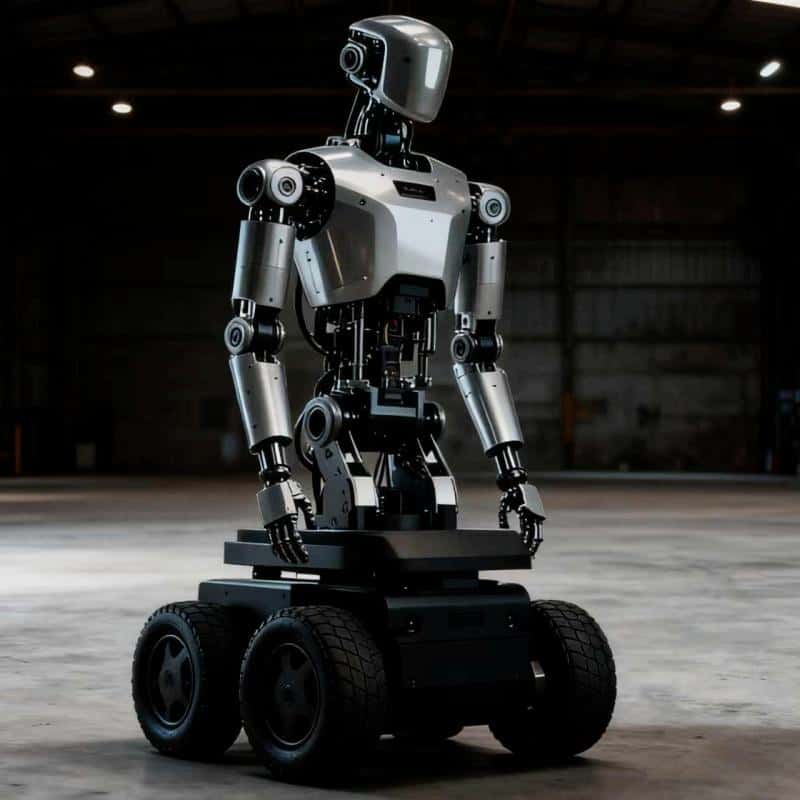
Wheeled humanoid and mobile manipulation robots must combine high AI compute, real-time control, multi-sensor perception, manipulation, and reliable data handling inside a mobile robot body. When compute is too large or too power-hungry for the torso, teams are forced to place processors in the chassis, creating long cable runs, signal attenuation, fatigue failure, and lower system reliability.
MScape Solution Approach
MScape supports wheeled humanoid robots across end-to-end VLA compute, logistics sorting, commercial cleaning, and data collection scenarios. The architecture can combine N Series embodied brains, T Series real-time control, and sensor-processing units to match the compute, synchronization, and safety demands of each application.
High-Compute Mobile Manipulation
N1000 provides 2070 TFLOPS-class compute for end-to-end closed-loop decision-making. Its compact 118 x 126 mm footprint, thermal design, and automotive-style locked connector architecture support integration into the robot torso while connecting cameras, EtherCAT, CAN FD, and perception-control interfaces.
High-Speed Logistics Sorting
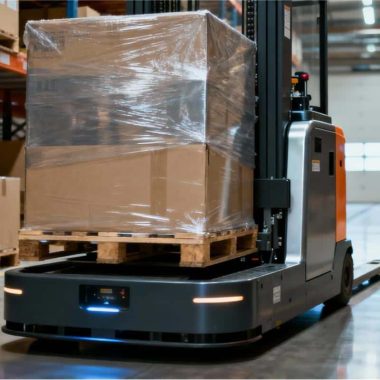
For conveyor sorting at 2 m/s, N201 uses a Xenomai real-time architecture and a general-compute plus real-time-control dual-domain design. It targets sub-microsecond interrupt response and microsecond-level jitter control, while Wi-Fi 7 supports high-throughput data return in dense industrial environments.
Commercial Cleaning and Contact Work
N210 + T40 separates vision processing and motion control across different compute cores. Multi-modal SLAM, 16-line lidar, RGB-D cameras, dynamic exposure control, 2000 Hz motion-control loops, and fast collision detection help robots operate on wet, reflective, and contact-rich surfaces.
Robot Data Collection
A T-S100 sensor-processing unit, N200 embodied brain, and T40 cerebellum can support hardware-level synchronization across 8 GMSL cameras, 6 USB 3.0 channels, lidar, and IMU data. This helps preserve data fidelity for reinforcement learning, SLAM, model training, and robot behavior analysis.
The Result: A Modular Compute-Control Architecture for Mobile Manipulation
Wheeled humanoid builders can evaluate compute, perception, manipulation, cleaning, sorting, and data-collection needs through a modular robot-side architecture instead of relying on oversized generic compute or fragile distributed cabling.
Why This Matters for Robot Builders
Wheeled humanoid robots sit between mobile robots and manipulation systems. Their success depends on how well compute, control, perception, safety, and data pipelines are designed as one robot-side architecture.
Key Engineering Requirements Addressed
Building a wheeled humanoid or mobile manipulator? Share your compute target, camera count, manipulation task, control bus, and data-collection requirements.
Start Technical Inquiry