Autonomous Forklift AI Compute & Control
The Challenge
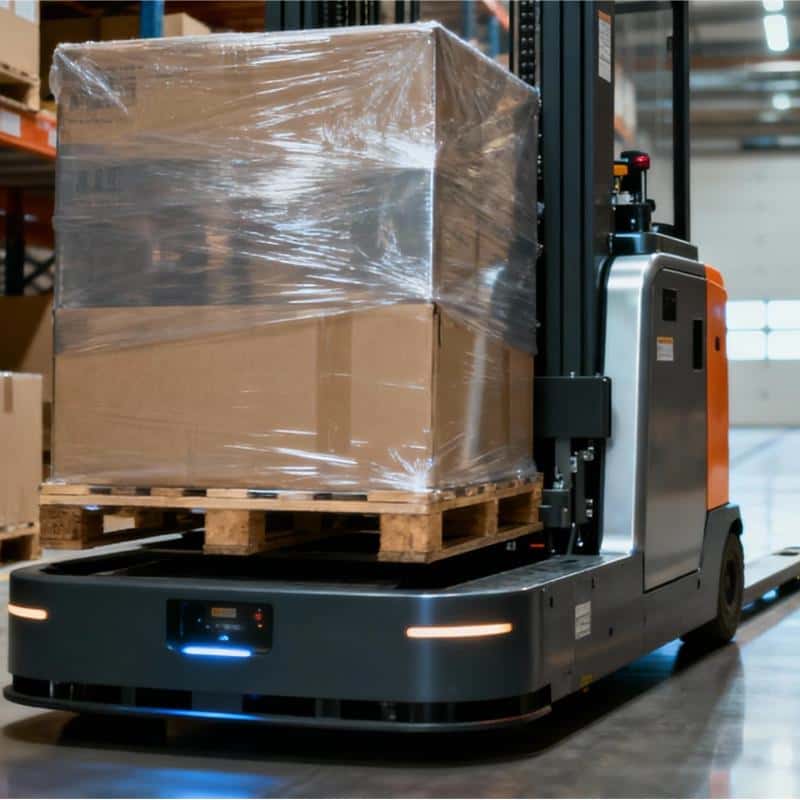
Traditional autonomous forklifts depend heavily on standardized racks and pallets. They struggle in non-standard environments where paths change, obstacles appear, shelves are irregular, or goods are placed inconsistently. Limited cargo recognition and rigid route planning reduce grasp success, interrupt operation, and increase the need for manual programming and maintenance.
MScape Solution Approach
MScape applies embodied intelligence to autonomous forklifts using N203/T200 compute platforms. The solution connects lidar, cameras, perception algorithms, dynamic planning, and interaction systems to improve non-standard cargo handling and reduce deployment complexity.
High-Precision Environmental Perception
N203/T200 can connect 8 sensor channels, including 3D lidar and high-definition cameras, enabling environmental modeling and real-time perception for non-standard rack and warehouse scenarios.
Dynamic Route Planning and Obstacle Avoidance
Intelligent path planning and real-time obstacle avoidance help the forklift adjust to changing warehouse layouts and maintain operation when the environment is not fully standardized.
Irregular Cargo Recognition and Handling
Deep learning algorithms help identify irregular goods, while high-precision manipulator control supports more stable picking and handling for goods that are not perfectly aligned.
Simpler Human-Machine Interaction
Integrated intelligent interaction support, including voice or command-based operation context, helps lower the skill threshold for deployment, operation, and on-site adjustment.
The Result: Smarter Forklift Autonomy for Non-Standard Warehouses
N203/T200 gives autonomous forklift developers a robot-side compute path for perception, recognition, planning, and interaction in warehouses where racks, goods, and routes are not always predictable.
Why This Matters for Robot Builders
Autonomous forklifts need to work in real warehouses, not only idealized test lanes. Stronger perception, recognition, and planning help reduce the cost of adapting every site to the robot.
Key Engineering Requirements Addressed
Developing an autonomous forklift? Share your warehouse layout, rack type, pallet variation, sensor plan, and control interface.
Start Technical Inquiry