Dexterous Robot Hand Control Platform

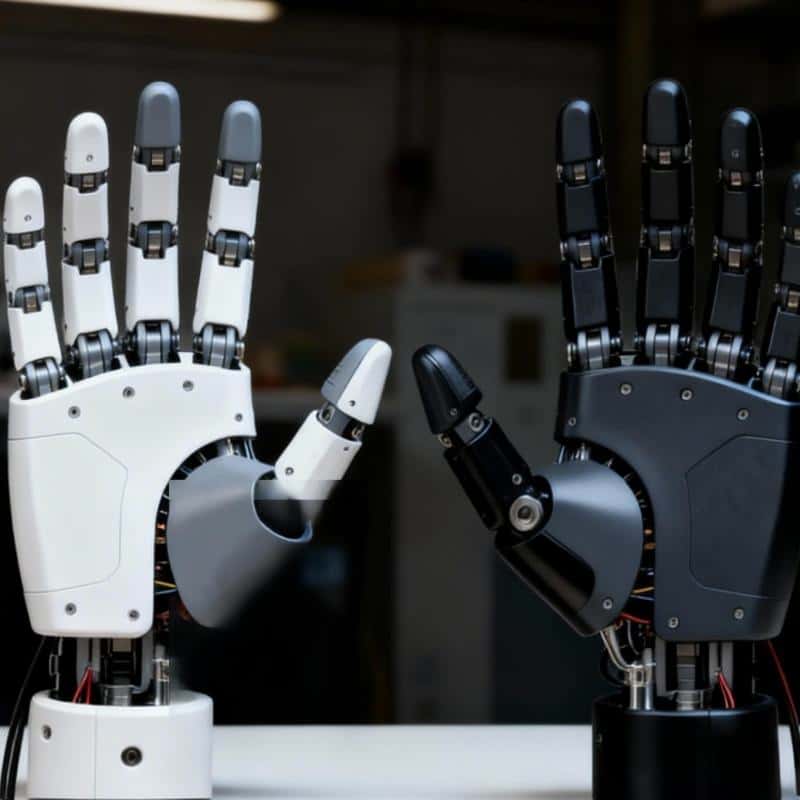
High-DOF robot hands need fast motor response, tactile feedback, and synchronized sensor processing close to the joints. MScape helps developers build dexterous manipulation systems with compact real-time controllers and robot-side AI compute for grasping, force control, and fine motion coordination.

dexterous robot hand control platform

The Challenge

Dexterous hands require high-precision torque and speed control across many compact joints. Traditional MCU-based designs often lack the compute and timing precision required for fine manipulation, and a single chip may only drive a small number of motors. As joint counts rise beyond 12 channels, software latency and coordination limits become major barriers to fast, synchronized, human-like hand motion.

MScape Solution Approach

MScape uses the T40 heterogeneous compute architecture and customized logic control to move core motor-control workloads closer to hardware. This reduces software delay, improves motion precision, and gives dexterous hand developers a compact platform for multi-joint synchronous control.

1

Hardware-Accelerated Motor Control

Core motion-control algorithms can be implemented through customized logic, reducing the timing uncertainty that appears when all control loops depend on software scheduling alone.

2

12-Channel Independent Motor Drive

The platform supports 12 independent motor-drive channels for synchronized multi-joint movement, allowing complex grasping, finger coordination, and fine manipulation tasks.

3

Logic + Embedded Processor Collaboration

Programmable logic units and embedded processing cores work together to schedule tasks efficiently, balancing real-time response, flexible adaptation, and controlled power consumption.

The Result: A Compact Real-Time Control Base for Dexterous Manipulation

T40 helps dexterous hand developers move from simple actuator driving toward synchronized, precise, low-latency finger control suitable for advanced manipulation and robot-hand integration.

12 ChannelsIndependent motor-drive support for multi-joint hand motion
Low LatencyHardware-assisted control reduces software scheduling delay
Fine MotionImproved torque and speed control for precision tasks
T40Compact heterogeneous compute and control architecture
Flexible LogicProgrammable units for customized control behavior
Low PowerDesigned for embedded operation inside compact robotic hands

Why This Matters for Robot Builders

Dexterous hands are limited by control timing as much as mechanical design. Precise grasping, compliant contact, and coordinated finger movement require deterministic low-level control that can keep up with many small actuators at once.

Key Engineering Requirements Addressed

PrecisionSupports torque and speed control for fine manipulation
SynchronizationCoordinates multiple joints for complex hand motion
Real-TimeReduces software-layer delay in motor control loops
EmbeddedBuilt for compact, power-sensitive robotic hand systems

Developing a dexterous hand? Share your joint count, actuator type, motor-control frequency, interface needs, and integration space.

Start Technical Inquiry

Other Applications

autonomous compute for container transport vehicles

Autonomous Compute for Container Transport Vehicles

Autonomous Compute for Container Transport Vehicles Unmanned container transport vehicles need reliable compute for multi-sensor perception, route planning, vehicle control, and yard-level autonomous operation. MScape ...
Read More →
quadruped robot edge ai computer application

Quadruped Robots

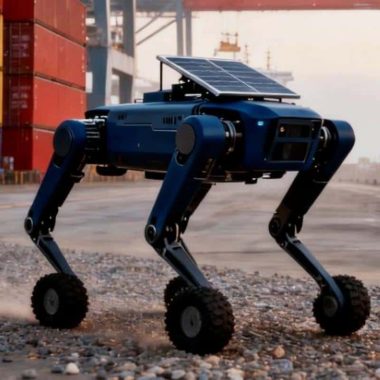
Quadruped Robot Compute & Motion Control Quadruped robots require low-latency compute for perception, balance, navigation, and legged locomotion across changing terrain. MScape integrates edge AI ...
Read More →
wheeled humanoid robot ai computing platform

Wheeled Humanoid Robot Compute Platforms

Wheeled Humanoid Robot Compute Platforms Wheeled humanoid robots combine mobile navigation, upper-body interaction, vision perception, and real-time control in one system. MScape provides robot-side compute ...
Read More →
Scroll to Top